
Pillar 1
Safety is Built in Everyday Moments
Physical and emotional safety are shaped by everyday experiences. Physical safety includes creating an environment that supports a person’s comfort, movement, and independence. It also means noticing when surroundings, routines, or the way support is provided may create unnecessary risk.
Emotional safety grows through the way we approach someone, communicate, respond, and offer support. When a person feels respected, heard, and not rushed, it can build trust and help the person feel more secure.
Slow Down the Interaction
A few extra moments can make a big difference.
•Pause and allow 90 seconds for a person to respond to your question.
•Allow time for processing.
•Avoid rushing through tasks or conversations.
Feeling rushed can increase stress and make participation more difficult. By slowing down, you help create emotional safety and build trust.
Understanding Emotional Safety
Emotional safety helps people feel…
•Respected.
•Heard.
•Included.
•Reassured.
•Supported without judgment.
•Comfortable.
•Safe.
What Helps Us Feel Safe?
Safety can mean different things to different people. Members of the National Council of
Dementia Minds share what helps them feel safe and supported in their everyday lives.
As you listen, think about this question:
What makes you feel safe? How might those same needs influence the people
you support?
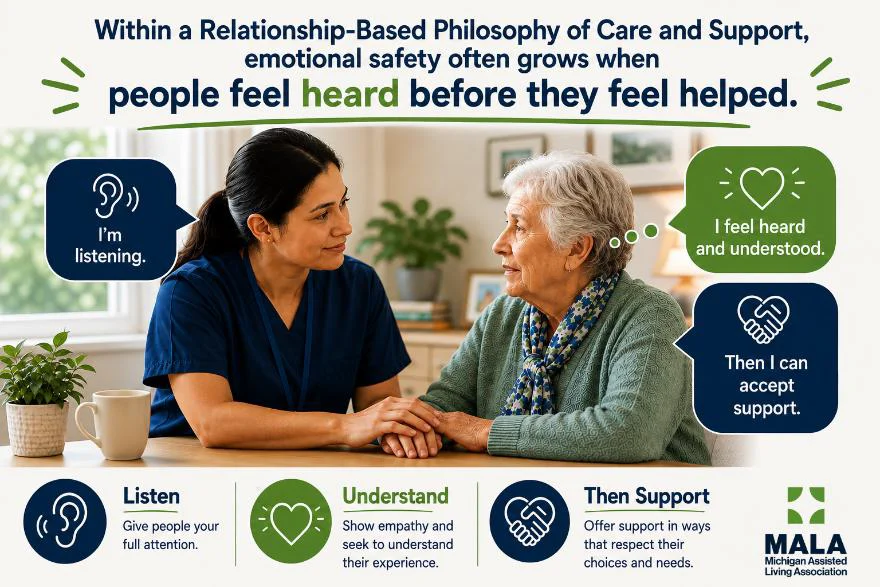
The experiences you just heard remind us that emotional safety often grows when people
feel heard before they feel helped.
The Slower You Go, the Faster You Get There
Many of us feel pressure to move quickly. Yet, individuals living with dementia consistently
share that being rushed increases anxiety and reduces confidence.
Taking a few extra moments to explain what is happening and what will happen next—using
schedules, calendars, visual cues, or simple reminders when helpful—can reduce
uncertainty and help conversations and daily activities go more smoothly. Answering
questions and allowing time for a response also helps people feel informed, prepared, and
supported.
Sometimes slowing down is the fastest way to build understanding and trust.